Visibility and Iconic Aspirations of Santa Muerte Devotion in Mexico
Utrecht University, Utrecht, the Netherlands
Wil G. Pansters
Received: 11 August 2025 | Revised: 2 January 2026 | Accepted: 10 February 2026
Keywords: 2000‐present | Americas | anthropology | Mexico | Northern America | popular belief | religions in the Americas | ritual | saints
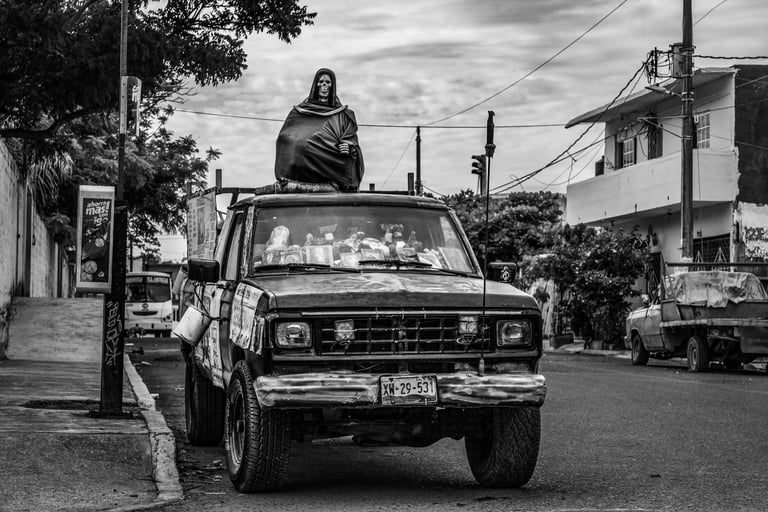
This article examines the manifestations and meanings of the spectacularly increased visibility of Santa Muerte devotion in contemporary Mexico. This remarkable development acquires significance against the background of the cult's previous history of concealed devotion. To confront their existential uncertainties and vulnerabilities, present day Santa Muerte devotees engage in a range visual, performative, and spatial practices. Although empirically signaled, hitherto no systematic analysis has been made of the cult's iconic aspirations and its increased public visibility in conceptual terms. To make up for this deficit and deepen our understanding of its meanings, this article explores the theoretical notions of “iconic aspirations” and (the anthropology of) “display.” As a key component of popular religion‐making, it is important to understand the assemblage of a new visibility regime by the efforts of assorted congregations and their leaders over the course of the past decades. Based on ethnographic material, I show how these range from place‐making interventions through the appropriation and sacralization of secular spaces, to the visibilizing effects of commodities, rituals, processions, and human bodies. These practices feature critical bottom‐up agency, that explains the cult's religious, iconographic, and expressive dynamics, as well as their profound social, political, and symbolic meanings.
‘La carroza de la niña’, Veracruz, 2019
© Alexis Ortíz González